What is Yeast Protein? A next-generation protein solution for the sustainable food industry
AIG
09/11/2026
The growth of high-protein foods is expanding demand for new protein sources that offer nutritional value and versatile applications. Yeast Protein derived from Saccharomyces cerevisiae yeast is one of the ingredients attracting attention thanks to its protein foundation, sensory properties and sustainable production approach. Asia Ingredients Group (AIG) provides Yeast Protein solutions, combined with applied research capabilities, to help businesses develop products that meet market demand.
Key takeaways
Yeast Protein is a protein source derived from Saccharomyces cerevisiae yeast, produced through fermentation technology.
Some Yeast Protein grades contain 55–90% protein, provide all 9 essential amino acids and achieve a PDCAAS of 1.0.
The ingredient has a clean, neutral flavor profile, making it suitable for a wide range of food and beverage formulations.
Fermentation technology supports protein production with low land use, reduced water consumption and limited emissions during manufacturing.
Yeast Protein can be applied in sports nutrition, protein-fortified beverages, dairy and dairy-free products, snacks, baked goods, nutrition bars and meat alternatives.
Asia Ingredients Group (AIG) provides Yeast Protein solutions, combining applied research and prototype development capabilities to help businesses select ingredients and finalize formulations according to production requirements.
Yeast Protein is a protein source derived from Saccharomyces cerevisiae yeast, produced using fermentation technology under controlled conditions. After cultivation and appropriate processing, protein from yeast biomass is developed into a high-protein food ingredient that can be used in a wide range of nutritional formulations and plant-based foods.
Yeast Protein from AIG is developed from yeast-derived protein and targets nutritional and plant-based food applications
Asia Ingredients Group (AIG) is a leading group in Vietnam in natural ingredient manufacturing and comprehensive ingredient solutions for the life sciences sector. Within its next-generation protein solutions, AIG focuses on developing Yeast Protein for the Vietnamese market, while advancing research, prototype development and ingredient solution optimization based on businesses’ real-world application needs.
2. Scientific specifications and benefits of yeast protein
Yeast Protein draws interest not only for its microbial origin but also for its protein content, amino acid profile and ability to be incorporated into different food formulations. These properties lead businesses to consider Yeast Protein when developing protein-fortified products, vegan foods and product lines targeting new nutritional needs.
2.1. Scientific specifications of yeast protein
Yeast Protein grades are developed at various protein levels. For the AngeoPro range, declared protein content ranges from 55–90% depending on the grade, with all 9 essential amino acids and a PDCAAS of 1.0.
PDCAAS is an index that evaluates protein quality based on essential amino acid composition and protein digestibility. A score of 1.0 is the highest possible under this method, indicating that the amino acid profile of Yeast Protein meets the requirements of the corresponding evaluation system.
In addition to protein and amino acids, some Yeast Protein grades are suited to vegan, non-GMO and gluten-free product development. Good sensory compatibility also allows the ingredient to be combined with many other formulation components while keeping the finished product’s sensory profile easy to control.
2.2. Benefits of yeast protein for businesses and consumers
Yeast Protein expands protein sourcing options for food manufacturers while offering consumers an additional way to add protein to their diet.
For businesses, Yeast Protein delivers notable value:
Developing high-protein formulations: High protein content and essential amino acid composition help businesses enhance the nutritional value of products according to formulation goals.
Expanding vegan ingredient options: Yeast-derived protein suits products that do not use animal-derived ingredients.
Easy ingredient combination: A relatively neutral flavor makes it easy to combine Yeast Protein with other ingredients and adjust sensory properties to meet finished product requirements.
Diversifying protein sources: Yeast Protein adds another ingredient option alongside animal and plant proteins, giving businesses more choices when building formulations.
Aligned with sustainable development: Fermentation technology allows controlled production conditions and reduces direct dependence on arable land and climate conditions.
Yeast Protein expands protein sourcing options for businesses developing diverse food and beverage formulations
For consumers, Yeast Protein offers nutritional choice benefits:
Provides protein and essential amino acids: Helps meet dietary protein needs when used at appropriate levels.
Suitable for vegan diets: Offers an additional non-animal protein option.
Meets diverse nutritional needs: Can be used in protein-fortified products for adults, active individuals or anyone interested in a high-protein diet.
The nutritional value of the finished product depends on the Yeast Protein inclusion level, formulation composition and the needs of each target user group. For products intended for children, older adults or groups with specific nutritional requirements, businesses should conduct a separate assessment of suitability and safety requirements before commercialization.
From a product development perspective, AIG helps businesses evaluate the application potential of Yeast Protein in food and beverage formulations and researches ingredient combination options to meet nutritional targets and finished product characteristics. This enables businesses to leverage the value of yeast protein according to actual production needs.
3. Why is Yeast Protein a strategic choice for manufacturers?
A new protein source must simultaneously meet many requirements in nutrition, sensory properties, production technology and product development direction. Yeast Protein offers businesses an additional approach when they aim to increase protein content, develop vegan formulations and source ingredients that can be produced under controlled conditions.
3.1. Superior nutritional foundation for optimized product formulations
Yeast Protein has a complete amino acid profile and a PDCAAS of 1.0 in the published grades. A BCAA content above 21% has also been recorded in clinical trials, providing a basis for the ingredient’s use in sports nutrition and protein supplement products.
Slow digestion is another notable characteristic of Yeast Protein. Simulated digestion tests show that the digestion rate of some types of Yeast Protein is lower than that of whey protein concentrate (WPC) and soy protein isolate (SPI) in the early stages, while final digestibility can reach equivalent or near-equivalent levels depending on the protein type.
This characteristic gives businesses more options when building formulations that use proteins with different digestion rates. However, slow digestion does not mean low digestibility, so these two concepts should be distinguished when evaluating the ingredient.
Beyond its nutritional foundation, a flavor that has little impact on the finished product’s taste makes Yeast Protein easier to work with during formulation. Businesses can consider the ingredient for many product bases while still actively adjusting flavor, texture and mouthfeel according to their own direction.
3.2. Optimizing the supply chain and production costs
Yeast Protein is produced using fermentation technology under controlled conditions, making production less directly dependent on arable land and climate conditions. This is an important characteristic as the food industry increasingly looks for protein sources that can meet nutritional needs while reducing pressure on natural resources.
Yeast Protein expands protein sourcing options for businesses developing diverse food and beverage formulations
Yeast Protein production follows principles of efficient resource use, with low land use, and is considered one of the promising approaches to optimizing resource use and reducing the environmental impact of protein production. Fermentation technology also enables more stable control of the culture environment and production conditions.
For businesses, these characteristics are meaningful when building an ingredient portfolio aligned with a sustainable development strategy. However, actual environmental impact should be assessed based on each specific production process, input material source and operating system.
>>> In line with its focus on efficient resource use, AIG also develops ingredients that upcycle agricultural by-products such as cassava pulp, contributing to a circular economy model in the production chain.
3.3. Meeting green consumer trends and elevating product positioning
Yeast Protein aligns with many trends shaping the modern food market, most notably demand for high-protein products, plant-based foods, non-GMO ingredients and sustainability-oriented solutions. With high protein content, a complete amino acid profile and a clean, neutral flavor, the ingredient enables businesses to enhance the nutritional value of their products while maintaining control over the sensory experience.
This trend is also reflected in the development of the global Yeast Protein market. According to a report by Growth Market Reports, the global Yeast Protein market is projected to grow from approximately USD 2.35 billion in 2025 to USD 4.72 billion in 2034, at a compound annual growth rate (CAGR) of 8.1%, driven by rising demand for sustainable and plant-based protein. The report attributes this growth to increasing demand for high-quality, sustainable protein sources and plant-based products, along with the expanding use of Yeast Protein in food, beverages and nutritional products.
4. Applications of Yeast Protein across diverse product categories
As a complete protein that can be combined with many formulation bases, Yeast Protein gives businesses an additional option when developing high-protein products that still require control over flavor, texture and sensory experience. Depending on the product category, inclusion levels and ingredient combinations should be adjusted based on nutritional requirements, production technology and finished product characteristics.
Sports nutrition: Yeast Protein can be used in products such as protein powders, protein drinks and nutrition bars. High protein content, all 9 essential amino acids and significant BCAA content make the ingredient a strong candidate for formulations targeting the protein needs of athletes and people interested in high-protein diets.
Functional beverages: Yeast Protein can be applied in protein-fortified drinks, nutritional beverages and liquid products designed to increase protein content. It can be combined with a variety of flavor bases without overpowering or significantly altering the finished product’s characteristic taste, enabling businesses to build formulations for health-conscious adults, athletes or consumers choosing vegan protein sources.
Plant-based milk: In nut milks, cereal milks and dairy alternative beverages, Yeast Protein can be used to add protein to plant-based product bases. The ingredient can be combined with nut and cereal bases, fats, stabilizers, sweeteners and flavorings to develop products with protein content suited to the formulation’s direction.
Nutrition for children and older adults: Yeast Protein can be considered in nutritional products for children, older adults and formulations requiring added protein. Its complete essential amino acid composition gives businesses another protein option when developing products; however, formulations for specific target groups should be separately evaluated for nutritional needs, ingredient inclusion levels and the corresponding safety requirements.
Meat alternatives and confectionery: In meat alternatives, Yeast Protein can add protein to plant-based product bases and work alongside texturizing ingredients, fats or flavorings. In confectionery, snacks and nutrition bars, the ingredient can be used to increase protein content, expanding options for high-protein or vegan product lines.
Yeast Protein applications in sports nutrition and functional beverages
In developing Yeast Protein solutions in Vietnam, Asia Ingredients Group (AIG) has carried out applied research and developed prototype products across multiple categories, including baked goods, beverages, dairy and plant-based foods.
The prototypes were tested and evaluated for sensory properties to determine the application potential of Yeast Protein in each formulation. Building on this, AIG continues to support businesses in researching, adjusting and developing products that meet technical requirements and the needs of the Vietnamese market.
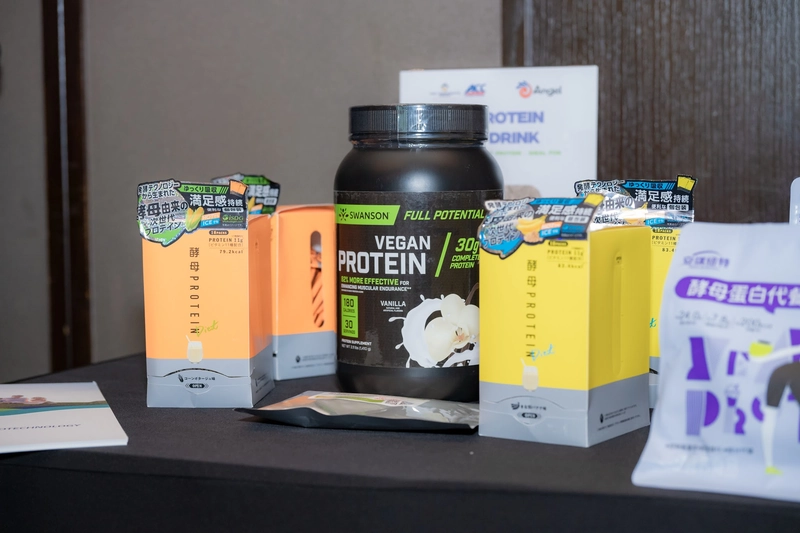
Prototype products using Yeast Protein developed by AIG and ACC to evaluate real-world application potential
5. AIG – A trusted strategic partner for yeast protein supply in Vietnam
To develop products using Yeast Protein, businesses need to choose an ingredient source that matches their nutritional goals, formulation characteristics and production conditions. Beyond protein quality, technical support capabilities and supply reliability are also key factors when selecting a partner.
Asia Ingredients Group (AIG) provides Yeast Protein solutions, combining ingredient supply capabilities with applied research to help businesses develop food and beverage products according to real-world requirements.
AIG supports businesses throughout the development of Yeast Protein products through the following activities:
Ingredient supply: Advising on the selection of Yeast Protein that matches nutritional goals, technical specifications and production needs.
Formulation research and development: Evaluating inclusion levels, compatibility of Yeast Protein with other ingredients and suitability for each product base.
Prototype development: Testing Yeast Protein applications in food and beverage categories to assess formulation feasibility.
Product evaluation and optimization: Supporting adjustments to flavor, texture and stability based on test results.
Production rollout support: Collaborating to finalize ingredient solutions according to technical requirements and the business’s product development direction.
Through applied research, AIG and ACC have developed Yeast Protein products applied across multiple categories such as baked goods, beverages, dairy and plant-based foods. Testing on different formulation bases helps evaluate the ingredient’s properties and identify suitable adjustments to meet finished product requirements.
With its supply capabilities and applied research support, AIG partners with businesses from ingredient selection through to product development and formulation finalization, meeting the need to build high-protein, vegan products aligned with market direction.
6. Frequently asked questions about Yeast Protein
6.1. Is Yeast Protein a genetically modified (GMO) ingredient?
No. Yeast Protein is produced from the natural yeast strain Saccharomyces cerevisiae, is non-genetically modified and meets vegan standards.
6.2. How does Yeast Protein compare nutritionally with whey protein?
Yeast Protein achieves the maximum PDCAAS score of 1.0, equivalent to whey protein, with a BCAA content above 21%, comparable to whey. However, Yeast Protein has different digestion characteristics compared with some common protein sources such as whey protein concentrate (WPC) or soy protein isolate (SPI), providing an additional option when building nutritional formulations.
6.3. What requirements must businesses meet to import and use Yeast Protein?
Businesses can contact the ACC team directly for advice on ingredient specifications, technical documentation and import procedure support to ensure compliance with domestic regulations.
6.4. Is Yeast Protein suitable for products for children and older adults?
Yes. Yeast Protein can be researched and applied in nutritional products for children and older adults. However, inclusion levels and specific formulations should be evaluated for each target group and in accordance with current regulations.
Yeast Protein is opening up new approaches for the food industry in its search for ingredient solutions that meet the market’s evolving requirements. Growing interest in alternative proteins also creates more room for businesses to research and develop new product lines.
Businesses interested in learning more about Yeast Protein and ingredient solutions suited to their product development direction can contact AIG to discuss with our expert team. AIG is ready to receive your requirements and work with you to find the right applications for your product and market goals.
Asia Ingredients Group (AIG) – A leading group in Vietnam in natural ingredient manufacturing and comprehensive ingredient solutions for the life sciences sector.
What are food ingredients? Roles, applications and food ingredient solutions from AIG
According to the Food Processing Ingredients Annual report by the U.S. Department of Agriculture (USDA, April 2026), Vietnam’s food processing industry continues to grow strongly, driving increasing demand for food ingredients. These are the components that shape the texture, flavor, sensory properties and nutritional value of food. Asia Ingredients Group (AIG) is a manufacturer of [...]
08/11/2026
Research and Development
What are nutrition ingredients? Nutritional ingredient solutions from AIG
Nutrition Ingredients are increasingly used in foods, beverages and nutritional products thanks to their ability to add nutritional value and support formulation development. Asia Ingredients Group (AIG) supplies a range of nutrition ingredient groups backed by research, application and supply capabilities, helping businesses choose the right solutions for their product goals. Key takeaways: Nutrition Ingredients [...]
10/10/2025
Events
AIG showcases Vietnamese agri-food excellence at Anuga 2025, expanding its presence in Europe
From October 4 to 8, 2025, Asia Ingredients Group (AIG) took part in Anuga 2025 in Cologne, Germany. This marked the company’s third time joining Vietnamese exhibitors at one of the world’s most prestigious and influential food and beverage trade fairs. Bringing together more than 7,800 exhibitors from 118 countries and attracting over 160,000 international [...]
26/09/2025
Events
AIG Honored Among Vietnam’s Top 25 Leading Brands 2025
On September 25, 2025, Asia Ingredients Group (AIG) was proudly recognized among the Top 25 Leading Brands of 2025 in the manufacturing and services sector, a key pillar of Vietnam’s sustainable growth strategy, as selected by Forbes Vietnam. This achievement further affirms AIG’s position as a market leader. Forbes Vietnam, part of the globally renowned [...]
28/07/2025
Events
AIG Leads the Way in Deep Processing and Sustainable Agricultural Value Chains in Vietnam
On the afternoon of July 25, 2025, Asia Ingredients Group (AIG) welcomed Mr. Nguyen Quynh Thien, Vice Chairman of the People’s Committee of Vinh Long Province, along with representatives from local departments and agencies, for a working visit to Asia Coconut Processing Joint Stock Company (ACP) – a key member of AIG’s high-quality agricultural processing [...]
23/06/2025
Events
APIS and ACP support young F&B entrepreneurs at “KHỞI 2025”
On June 19, 2025, APIS and ACP—two member companies of Asia Ingredients Group (AIG)—participated as key partners in the “KHỞI 2025” forum held in Ho Chi Minh City. The event brought together nearly 150 entrepreneurs, startup founders, and industry experts in the food and beverage (F&B) sector to connect and explore sustainable business solutions. Comprehensive [...]
 EN
 VI